
HOMEWORK SUBMISSION: Monday, June 23, 2014
Direction: On a sheet of size 2 paper, write the following measurements in centimeters (cm):
a. your height
b. length of your right foot
c. length of your elbow to wrist
d. circumference of your neck
e. circumference of your waist
Homework: Use a sheet of size 1 paper to answer.
Direction: On a sheet of size 2 paper, write the following measurements in centimeters (cm):
a. your height
b. length of your right foot
c. length of your elbow to wrist
d. circumference of your neck
e. circumference of your waist
Homework: Use a sheet of size 1 paper to answer.

HOMEWORK:
Direction:
Choose one question to answer by making a short research about it on a sheet of
size 1 paper. Please provide sources.
1.Why do you need to hit the tennis ball in the “sweet spot” of the racket?
2.What are the factors that affect the sound produced by a guitar?
3.Why does a cue ball stop immediately after hitting an eight ball?
4.What is the “Magnus Effect”?
5.What is the difference between an LED and an LCD television screen?
6.How does a (Global Positioning System) GPS works?
7.How does an x-ray machine produce an image of the body?
8.What is the difference between an x-ray and an MRI scanner?
9.How does a microwave oven works?
IMPORTANT: Submission date is Friday, June 13, 2014.
|
Direction: Use a sheet of size 2 paper to answer the following questions:

|
IMPULSE-MOMENTUM THEOREM
Basilisk lizards can run across the top of a water surface. With each step, a lizard first slaps its foot against the water and then pushes it down into the water rapidly enough to form an air cavity around the top of the foot. To avoid having to pull the foot back up against water drag in order to complete the step, the lizard withdraws the foot before water can flow into the air cavity. If the lizard is not to sink, the average upward impulse on the lizard during this full action of slap, downward push, and withdrawal must match the downward impulse due to the gravitational force. Suppose the mass of a basilisk lizard is 90.0 g, the mass of each foot is 3.00 g, the speed of a foot as it slaps the water is 1.50 m/s, and the time for a single step is 0.600 s. a. What is the magnitude of the impulse on the lizard during the slap? (Assume this impulse is directly upward.) b. During the 0.600 s duration of a step, what is the downward impulse on the lizard due to the gravitational force? c. Which action, the slap or the push, provides the primary support for the lizard, or are they approximately equal in their support? |
HOMEWORK: Submission is Friday, September 20, 2013

| application_of_newton.pdf |
HOMEWORK
Read Chapter 5 of your physics textbook. Please use a sheet of size 1 paper in answering the problems below.

|

|
LONG TEST 3 Regular Physics ProgramCoverage:
Kinematics and Motion Graphs Freefall Introduction to Forces Newton's Laws of Motion |
HOMEWORK: Regular Physics Program
| ||||
| may_the_force_be_with_you.pdf |
| newtons_laws.pdf |
HOMEWORK
| |||||||||||||
| practice_problems_29_july_2013.pdf |
| practice_problems_01.pdf |
| homework.pdf |
| homework_sp.pdf |
Physics HW for submission on June 25, 2013
| relationships_hw.pdf |
Homework: 17 June 2013
Direction: Download the file below and answer the questions completely.
| physics_homework.pdf |

Homework: 13 June 2013
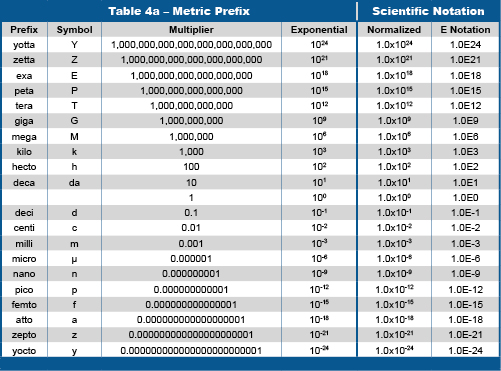
Direction: Review metric prefixes below then complete the table at the right using your notebook.
HOMEWORK
Submission: Tuesday, August 6, 2013


|

|

|

|
Homework
Direction: On a sheet of size 1 paper, answer the following problems completely. Use GRESA and express your final answers to two decimal places. (Enlarge image)

|
|


|


|

|


|
VECTOR RESOLUTION (COMPONENT METHOD OF VECTOR ADDITION)
A method of determining component vectors from a resultant vector A graphical operation replaces a single vector with two perpendicular vectors in such a way that the vector composition of the two perpendicular vectors yields a resultant equal to the original vector. |

|

(300) cos40 = +229.81
(200) cos 100 = -34.73
(100) cos 30 = +93.97
(150) cos 180 = -150.00
|
